
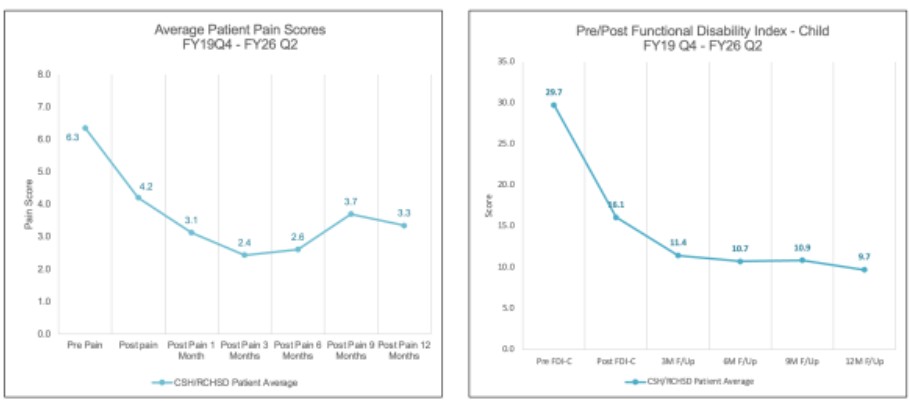
Children who graduated from the program reduced pain scores from 6.4 to 3.4 and increased school attendance from 11.5 percent to 85.2 percent at follow-up
As pediatric chronic pain and Functional Neurological Disorder (FND) diagnoses rise nationwide, health systems are seeking effective nonpharmacologic treatment options. Research supports a multidisciplinary model for pediatric chronic pain and FND. Clinical outcomes from programs such as the one at Rady Children’s Health demonstrate significant improvements in pain, function, mobility, disability, and school participation following intensive rehabilitation.
Program Model
Programs such as the one at Rady Children’s deliver care through an integrated team that includes physicians trained in physical medicine and rehabilitation, psychologists, physical and occupational therapists, recreational therapists, and social workers.
The approximately 28-day inpatient rehabilitation program is designed to restore function, retraining the nervous system rather than eliminating pain, with a focus on reintegration into school, physical activity, and daily life. The interdisciplinary treatment is evidence-based and includes patient and family education on symptoms and diagnosis, as well as development of adaptive coping skills. The program avoids reliance on pain medications.
Clinical Outcomes
Recent clinical outcomes at Rady Children’s demonstrate meaningful improvements across multiple domains from admission to discharge, with sustained gains at follow-up.
Among patients with FND:
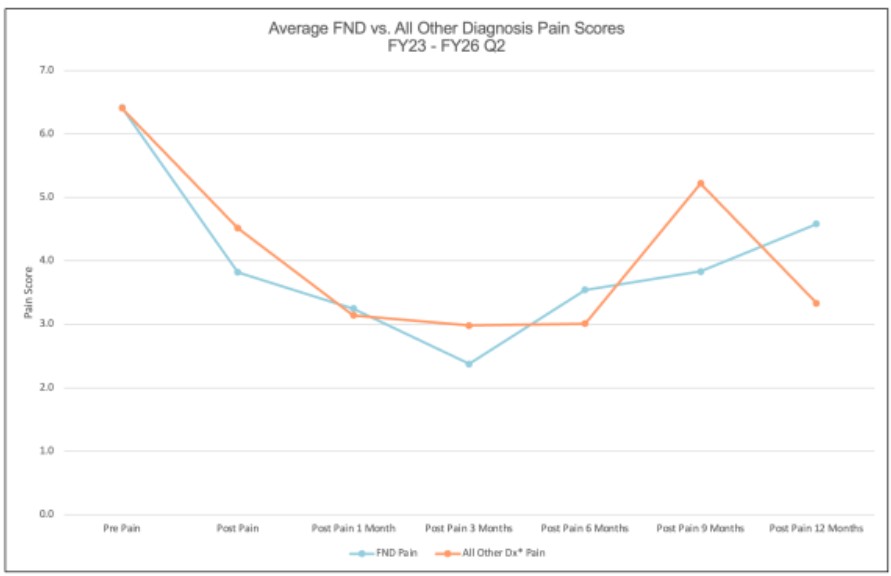
- Pain severity decreased from 6.4 at admission to 3.8 at discharge, with further reduction to 2.4 at three-month follow-up
- Functional Disability Index (FDI) improved from 29.7 to 16.1
- Motor proficiency (BOT-2) increased from 38.0 to 49.5
- Lower Extremity Functional Scale (LEFS) improved from 41.0 to 65.3
- Pediatric quality of life scores increased from 46 percent to 64 percent
Across the broader chronic pain population:
- Mean pain scores decreased from 6.4 to 4.5 at discharge and to 3.0 at three months
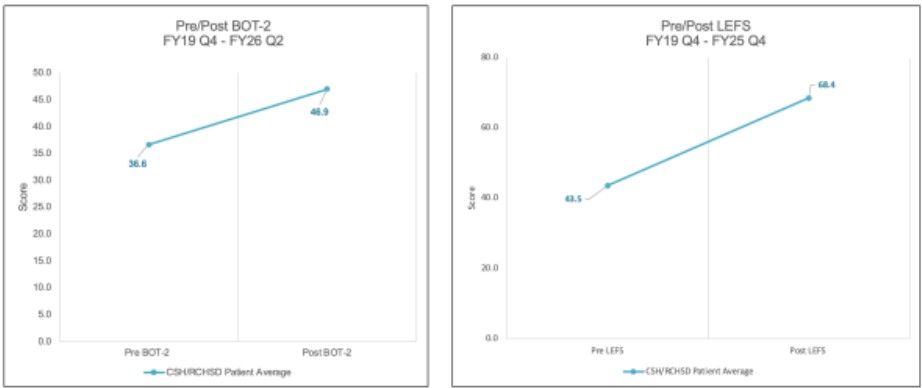
- LEFS scores improved from 43.5 to 68.4 (see below)
- Child-reported disability (FDI-C) decreased from 30.3 to 16.1, and to 12.4 at follow-up
- Parent-reported disability (FDI-P) decreased from 30.8 to 10.2
- Motor function (BOT-2) improved from 36.6 to 46.9
- School attendance improved substantially, with the proportion reporting no absences increasing from 11.5 percent at admission to 85.2 percent at three months
- At follow-up, 100 percent of parents reported no missed workdays related to their child’s condition
- Eighty percent of patients reported adherence to a home exercise program at three months
As demand grows for effective pediatric chronic pain and FND management, this focused rehabilitation model demonstrates meaningful improvements in physical activity, independence, school re-entry, and quality of life by providing each patient with the tools needed to manage potential stressors.
Refer a Patient
If you have patients with chronic pain or FND experiencing ongoing functional impairment, submit a referral to the Chronic Pain and Functional Neurologic Disorder Management Program, here.