
When Bronson first connected with Rady Children’s Hospital San Diego, he was barely bigger than a baseball.
Marissa went into her 20-week ultrasound expecting the usual: a quick look, a few photos and reassurance. What she got instead was the kind of news that changes everything.
Her baby boy had pulmonary atresia with intact ventricular septum, a rare congenital heart defect. One of his heart’s two main pumping chambers wasn’t forming the way it should, and Bronson would come into the world with one ventricle carrying most of the load.
“It felt like the ground disappeared beneath us,” Marissa remembers. “But I looked at his dad and said, ‘One day with Bronson is better than none. Let’s give him a chance.’”
CHOOSING HOPE
As the reality of Bronson’s diagnosis set in, the family faced decisions that felt impossible.
Their care team explained the many paths Bronson’s life could take: He might need a tracheostomy. He might never eat on his own. He might never walk.
Still, they chose hope.
“We knew it wouldn’t be easy,” Marissa says. “Nothing compares to watching your child being wheeled into an operating room.”
When Bronson was born, Rady Children’s Heart Institute had a full team in place, ready to step in.
Not long after, he faced an intricate heart operation performed by John Nigro, MD, division chief of Cardiac Surgery and Cardiac Transplant Services at Rady Children’s. Through all of it, the team worked to ensure the family didn’t feel alone.
After surgery, Bronson was followed through Rady Children’s Home Monitoring Program, directed by Jessica Haley, MD, a pediatric cardiologist and the program’s director, and an assistant clinical professor of pediatrics at UC San Diego School of Medicine. The multidisciplinary monitoring program supports vulnerable infants with cardiac disease after they’re sent home from the hospital post-surgery.
The program enables patients to be at home in a safe and monitored environment, which is shown to have both physical and emotional health benefits.
“As scary as it was, we always felt like there was a team beside us,” Marissa says. “Every doctor, nurse and staff member treated Bronson like he mattered. They cared for our whole family. It made all the difference.”
Now eight years later, Bronson is still followed closely through Rady Children’s Single Ventricle Clinic. There, his health is monitored by José Silva Sepúlveda, MD, the program’s director and an assistant clinical professor of pediatrics at UC San Diego, as well as a multidisciplinary group that also makes sure his family has support along the way.
“OUR GOAL IS NOT ONLY TO HELP THEM LIVE LONG BUT TO HELP THEM THRIVE. SEEING KIDS LIKE BRONSON GROW UP, PLAY SPORTS, BUILD FRIENDSHIPS AND ENJOY THE THINGS THEY LOVE IS WHY THIS WORK IS SO MEANINGFUL.”
“Children with single-ventricle heart disease are some of the most resilient patients we meet,” Dr. Sepúlveda says. “Our goal is not only to help them live longer, but to help them thrive. Seeing kids like Bronson grow up, play sports, build friendships and enjoy the things they love is why this work is so meaningful.”
What makes the clinic different is the number of elements together in one place. Specialists across the Heart Institute, and beyond it, coordinate so families aren’t left stitching care together on their own.
“We know these families are managing a lifelong journey,” Dr. Sepúlveda says. “By working together as a team, we can support every aspect of a child’s health and help families feel confident about the future.”
Today, most children with single-ventricle heart disease are expected to reach adulthood, making lifelong care and preparation for the transition to adult congenital heart care an increasingly important part of the program.
PLAY BALL
At 8 years old, Bronson is doing exactly that: living forward.
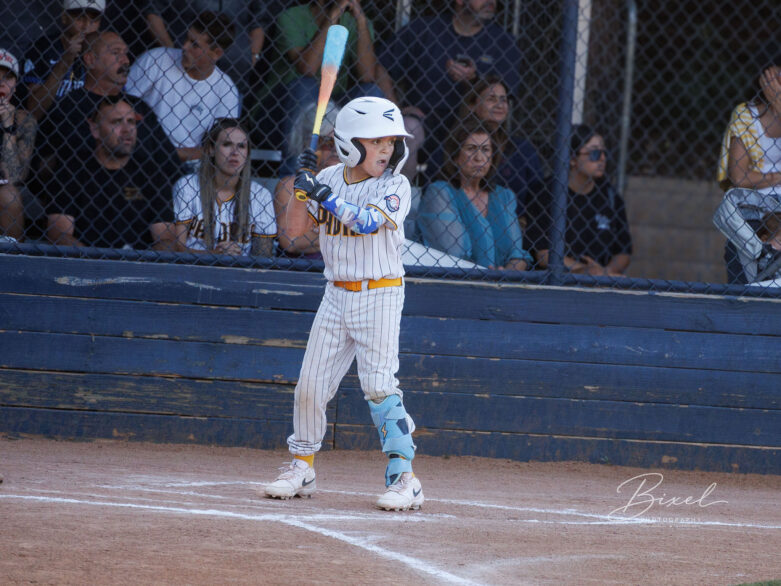
He can usually be found on the baseball field. He’s a committed Padres fan, an energetic catcher and the kind of kid who treats baseball cards like treasure. He’s also the kind of child who can walk into a new place and come out with friends, leaving a trail of smiles behind him.
“He lives and breathes baseball,” Marissa says. “If there’s a ball nearby, he’s ready to play.”
One especially meaningful experience, a baseball skills camp with Padres outfielder Jackson Merrill in La Jolla last June, was made possible through a partnership between Rady Children’s and Alaska Airlines.
“For Bronson, it was a dream come true,” Marissa says. “It’s a memory he’ll never forget.”
Bronson’s journey didn’t just change his own life. It also redirected his mom’s.
Marissa wanted to give something back to the Hospital that showed up for her son. When Bronson was 1, she joined the Rady Children’s team. She began in Environmental Services, moved into work as a patient transporter and nursing assistant, then later went back to school to become a surgical technologist. Now she works in the very area where Bronson once received care.
“It still feels unbelievable sometimes,” she says. “Being able to help other families during difficult moments means everything to me. It truly feels full circle.”
When Marissa looks back, she doesn’t just see a medical story. She sees endurance, hope and what compassionate care can do when it meets a family in their most fragile state.
“Bronson is strong, courageous and full of purpose,” she says. “We’re so grateful for every moment.”
“THEY CARED FOR OUR WHOLE FAMILY. IT MADE ALL THE DIFFERENCE.”
“IT STILL FEELS UNBELIEVABLE SOMETIMES, BEING ABLE TO HELP OTHER FAMILIES DURING DIFFICULT MOMENTS MEANS EVERYTHING TO ME. IT TRULY FEELS FULL CIRCLE.”