
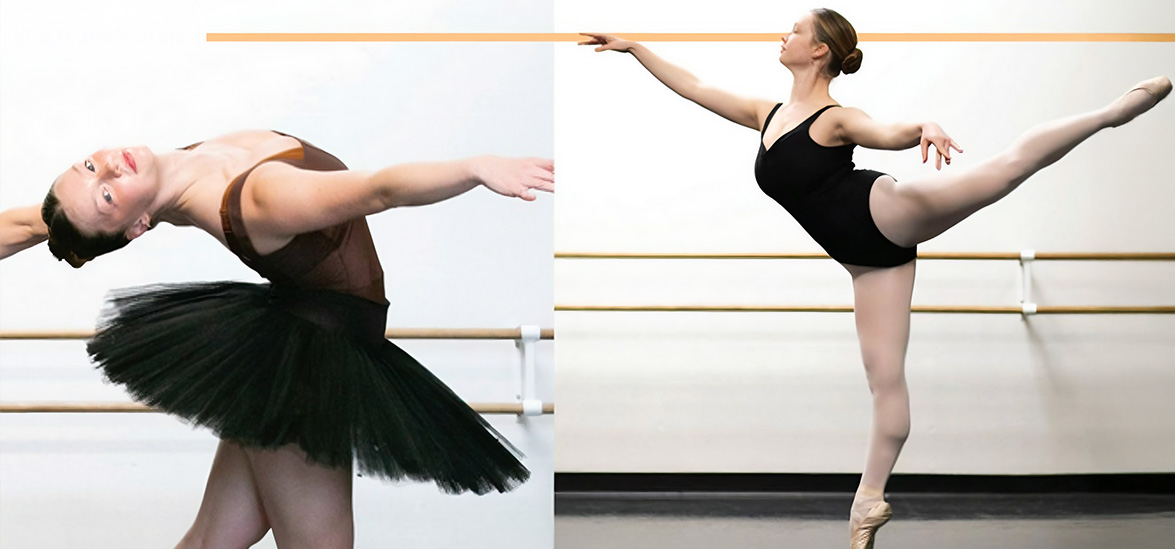
Sisters London and Sharkey dance their way through injury and recovery
For sisters London and Sharkey, dance has always been more than just an extracurricular activity — it’s a way of life. Both girls donned ballet slippers at the age of 2 and haven’t looked back since.
“Ballet is the alphabet of dance,” says their mom, Mariah. “It’s the foundation of so many good things, like muscle memory and the connection between music and movement. There’s a beautiful mind-body discipline to it, so we started them young on purpose.”
Their passion for dance carried them through countless rehearsals and performances, but also eventually led them to face something all too familiar in the world of elite ballet: injury.
Sharkey’s Story: Dancing Through the Pain
For Sharkey, pain crept in slowly. Like many dancers, she continued to dance through the pain without complaint. By the time she spoke up, she had developed a more chronic injury that had worsened over the years.
Initial visits to a dance therapist recommended by the studio didn’t help. That’s when they turned to Emily Cidambi, MD, a pediatric orthopedic surgeon at Rady Children’s with a deep understanding of ballet and sports injuries. In her practice, Dr. Cidambi focuses on congenital, acquired and traumatic conditions of the foot, ankle and lower extremity, with a particular interest in dance medicine. A longtime ballet dancer herself, she brings a personal and professional connection that benefits this patient group.
“Dr. Cidambi saw Sharkey about a month later and diagnosed her with os trigonum syndrome — a painful condition caused by an extra bone in the back of the ankle. She recommended a period of rest, along with a steroid injection and casting,” Mariah explains. “She was especially great because she understood ballet on a technical level.”
Recovery meant months of physical therapy. “She was diligent about her rehab, and over time, with consistency and her love for dance, she got her strength and confidence back,” says Mariah.
London’s Story: Choosing Surgery and a New Stage
Her sister, London, experienced an injury that came on faster, with more acute pain. Her ballet teacher noticed something wasn’t right, and after a visit to their pediatrician, London was also referred to Dr. Cidambi, who diagnosed her with os trigonum syndrome as well. For London, surgery was offered as an option.
“At first we encouraged her to wait,” Mariah says. “But London was brave. She wanted to move forward with the surgery, and she trusted Dr. Cidambi because of her experience treating Sharkey.”
The recovery process wasn’t easy — ballet and pointe work remained painful even months after the procedure. But London didn’t give up. Instead, she embraced a new path, auditioning for her school’s prestigious Dance Conservatory, which focuses on contemporary, modern, jazz and hip-hop styles.
Care That Understands the Dancer
“Working with young dancers like London and Sharkey requires not only medical expertise, but also a deeper understanding of the mindset and demands of a dancer,” says Dr. Cidambi. “My goal is to treat the underlying problem in a way that allows the dancer to return to movement as soon as possible, but design their recovery and rehab pathway in a way that aligns with their goals and dance schedule, without risking their physical health.”
When asked what advice she’d give to other parents of young dancers, Mariah reflects: “Preventing injury through strength training and cross-training early on is key. And if your child is hurting, don’t wait — trust your instincts and seek care sooner rather than later.”
For London and Sharkey, dance has always been a source of joy, discipline and resilience. “Ballet taught them how to show up, how to push through challenges and how to stay committed to what they love,” Mariah says. “Thanks to Dr. Cidambi’s thoughtful, knowledgeable care, they were able to return to the studio not just as dancers, but as stronger, more confident versions of themselves.”